

There are days when someone tells you to “just be grateful” and something inside you tightens.
Not because gratitude is wrong. But because the timing feels off, like being handed a thank-you card while you’re still bleeding.
If you’ve ever felt guilty for not being able to muster thankfulness in the middle of something hard, you’re not broken. You’re honest. And that honesty is worth more than a hundred forced affirmations.
Why Gratitude Sometimes Feels Like a Lie
When life is genuinely painful, gratitude can feel performative.
You know you “should” feel thankful for what you have. But the gap between what you know and what you feel can be enormous.
This is not a character flaw. It’s a sign that your emotions are doing exactly what they’re supposed to do. They’re telling the truth about where you are right now.
The Problem With Toxic Positivity
There’s a version of gratitude that gets weaponized. It sounds like: “At least you have your health.” Or: “Other people have it worse.” These phrases aren’t gratitude. They’re dismissal wearing a pleasant mask.
Real gratitude never asks you to shrink your pain.
It doesn’t demand you compare your suffering to someone else’s and decide yours doesn’t count.
Psychology Today notes that emotional well-being comes not from eliminating negative emotions but from learning to hold multiple truths at once.
Gratitude and Grief Can Sit at the Same Table
Maybe you’ve noticed that some of your most grateful moments have come right alongside deep sadness.
You can miss someone terribly and still feel thankful they were part of your life.
You can be exhausted by a season of hardship and still notice the friend who showed up without being asked.
These two feelings don’t cancel each other out. They coexist. And letting them both be present is one of the bravest things you can do.
What “Both/And” Thinking Looks Like
Instead of choosing between “I’m grateful” and “I’m struggling,” try holding both.
It can sound like: “This year has been one of the hardest I’ve faced, and I’m thankful for the people who stayed.”
Or: “I’m disappointed with how things turned out, and I can see the small things that kept me going.”
This kind of thinking doesn’t minimize your experience. It makes room for the full picture.
You Don’t Have to Be Grateful for the Pain Itself
Let’s be clear about something.
- You do not have to be grateful for the thing that hurt you.
- You don’t have to thank the loss, the betrayal, or the breakdown.
That’s spiritual bypassing, and it does more harm than good.
What you can do, when you’re ready, is notice what grew in the space that pain created.
- Maybe it was resilience.
- Maybe it was a boundary you finally set.
- Maybe it was simply the knowledge that you survived something you weren’t sure you could.
Start Smaller Than You Think
If gratitude feels heavy right now, scale it way down.
- You don’t have to write a list of fifty things.
- You don’t have to feel overwhelmed with appreciation.
- You just have to notice one thing.
The warmth of your coffee. The fact that someone texted you back. A moment of quiet in an otherwise chaotic day.
Research from the Greater Good Center at UC Berkeley has found that even small, consistent gratitude practices can reduce symptoms of depression and increase life satisfaction over time.
Gratitude Is Not a Performance
You don’t owe anyone a gratitude display. You don’t have to post about it, journal about it, or announce it at dinner.
Practicing gratitude in your hardest moments can be as quiet as a single breath and a thought that says: I’m still here. That counts.
The pressure to be visibly thankful can actually block the real feeling from arriving. Give yourself permission to let gratitude be private, messy, and imperfect.
What Gratitude Looks Like When You’re Healing
When you’re in the middle of healing, gratitude doesn’t look like sunshine and butterflies.
It looks like noticing you slept a little better last night. It looks like catching yourself laughing at something small and not feeling guilty about it.
It looks like acknowledging your own effort. You showed up today. You tried. That deserves some self-gratitude, even if the day didn’t go the way you hoped.
A Practice, Not a Destination
Gratitude isn’t something you arrive at and stay forever. It comes and goes, like waves.
Some days it will feel natural. Other days it will feel impossible.
Both of those days are valid.
The goal is not to feel grateful all the time. The goal is to leave the door open so that when gratitude does show up, you recognize it. Even when it arrives alongside something painful.
Holding It All With Honesty
You can be thankful and tired. Grateful and grieving. Appreciative and still healing.
None of these things are contradictions. They’re just proof that you’re a full, feeling human being navigating a complicated life.
You don’t have to choose between honoring your pain and noticing your blessings. You can do both.
And doing both, with honesty and without performance, is one of the gentlest gifts you can give yourself.
Something to Sit With
Gratitude isn’t the absence of pain. It’s the willingness to notice that even in painful seasons, something beautiful can still exist beside what hurts. You don’t have to force that awareness.
You only have to leave a little space for it when it arrives.
Journal Prompts
- Where in your life are gratitude and grief sitting side by side?
- What pain have you been trying to rush yourself past instead of honoring?
- What is one ordinary moment today that quietly reminded you life is still happening?
- What part of yourself deserves gratitude for simply making it this far?
- How would your life change if you stopped believing you had to choose between healing and hurting?
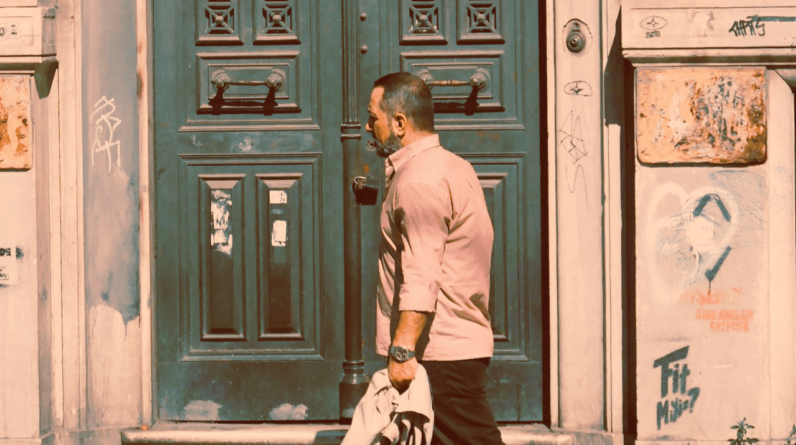
Photo by Mehmet Ali Turan